 |
One of the characteristics of autism is repetitive or unusual behaviors. Which varies a lot depending again on if the child was diagnosed with mild or mild to moderate or severe autism. Not all autistic kids does what is listed.
| Sense | Stereotypic Behaviors |
| Visual | staring at lights, repetitive blinking, moving fingers in front of the eyes, hand-flapping |
| Auditory | tapping ears, snapping fingers, making vocal sounds |
| Tactile | rubbing the skin with one's hands or with another object, scratching |
| Vestibular | rocking front to back, rocking side-to-side |
| Taste | placing body parts or objects in one's mouth, licking objects |
| Smell | smelling objects, sniffing people |
Self-stimulatory or repetitive behaviors: some of these are very obvious like flapping hands, making repetitive sounds, flapping fingers in front the eyes, turning in circles, clenching muscles, jumping up and down, making repetitive sounds. The less obvious ones are twirling of hair, tapping fingers and blinking or eye rolling. Some children engage in these behaviors when excited or agitated, while others engage in them at a level that interferes with everyday living. self-stimulatory behavior ties in with modulation, when over stimulated these activities increases.
Obsession and Ritual
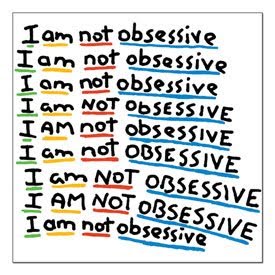
The diagnostic criteria for repetitive and stereotyped behaviors in autism, which shows restricted interests and activities, is a fundamental expression of the condition. Children with autism may seem obsessed with a mysterious object or non-functional part of a toy and may become very upset when taken away from them. The strangest thing about this behavior may be that the object or toy is not used for a particular purpose or function. Other people with autism can be obsessed with some numbers, or the collection of particular objects with water, to memorize the bus schedule or travel destinations. These are all pretty typical obsession , but differ in the extent to which the obsession consumes the individual, their control over the obsession, and special interest non-functional.
Stereotyped Behavior
For people with autism in the world can be a bit confusing. Impairment of theory of mind, it may be difficult to understand other people as well as understand things and events in context and using meaning for them. It seems that the unnecessary or non-functional objects or interests may be of particular importance for some people with autism, while some interest rates more generally accepted may be insufficient in importance. There is great freedom in autism, for example, areas that have little meaning to the importance or significance may be subjects of interest to people with autism. It is common obsessions as mechanisms (such as moving parts) or numeric fields (such as bus routes or timetables). These are areas that avoid the problems that people with experience of autism (social interaction and understanding, the need for communication) and focus on their skills (by heart memory, spatial awareness, etc.) or obsession with ceiling fans and street lights and light switches etc. these obsessions should try to be lessened by introducing the child to new experiences and keeping their mind active. However in the event of a change in their routine or something unexpected these behaviors may increase for a while.
Repetitive Stereotyped Activities
Individuals in ASD often engage in repetitive, stereotyped activities. These actions can be simple or complex. Children usually show a greater ability to more complicated routines.
Simple stereotyped activities
In instance : hitting the fingers, objects, pieces of string, etc., rotating objects or looking at spinning objects, tapping and scratching on surfaces, inspection, and walk along the lines and angles of tracking, feel special textures, rag, etc., rocking up and jump, play, scratch or manipulate other parts of the body, repetitive head banging teeth grinding grunts repetitive self-harm, shouting or making other noises
Complex stereotyped activities involving objects
Examples: intense attachment for particular objects for no apparent reasons, a fascination with regular repeated patterns of objects, sounds, etc. repeatedly arranging objects in lines or patterns, the collection of a large number of specific objects such as plastic bottles, stones, or Top seemingly endless.
Complex stereotyped activities involving routines
Examples: insistence on following the same path in some places the emphasis on achieving a long bedtime routine, the repetition of a sequence of movements of foreign body
Complex verbal or abstract repetitive activities
In instance: the fascination with certain subjects, for example. astronomy, birds, train schedules, including specific individuals, the same questions and demand satisfactory answers
Challenging Behavior and Tantrums
Unfortunately for people with autism and their families that the rage and destructive behavior is common, especially among children. Challenging Behaviour The term is controversial, but it is intended to suggest that the behavior is a challenge for professionals and services. This is supposed to prevent the internalization of the cause of behavior and blame for the individual. This is very important in autism because it is unlikely that any behavior that creates problems for families and professionals is certainly malicious or vindictive. There is almost always another reason not identified, causing challenging behaviors.
AGAIN THE LEVEL OF THESE BEHAVIOR VARIES WHICH EACH CHILD, DEPENDING ON THE EVALUATION, SOME KIDS DISPLAY VERY MILD FORMS OF THESE BEHAVIORS WHILE OTHER A VERY INTENSELY.
